Category: Article

  • Yang Style Tai Chi Chuan

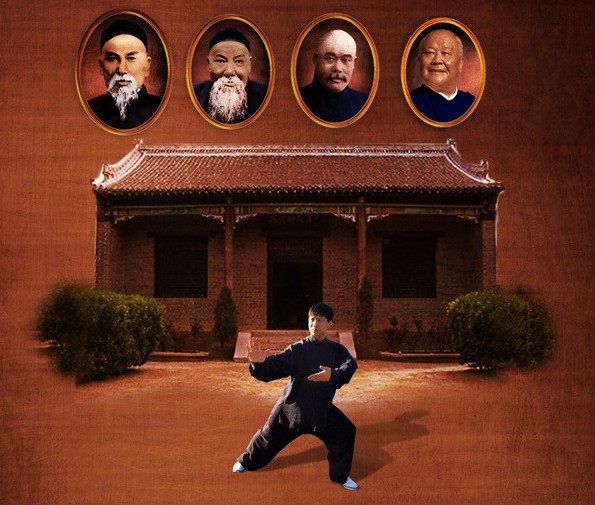
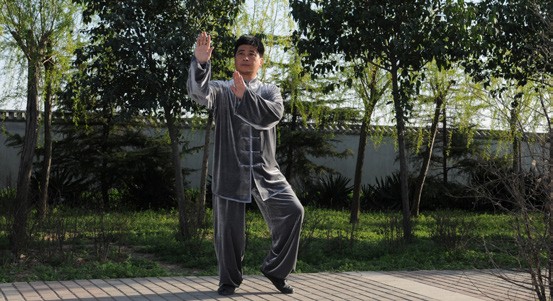
    Symposium-newsletter-3_page10_image1Yang Style Tai Chi Chuan originated from   Yang  Luchan   (1799-1872). He was born in what is now called Guangfu Town, Yongnian County, Hebei Province and studied with Chen Chanxing, a 14th  generation Chen family martial arts master  from  the  Chen  Village in  Wen County, Henan. Yang Family Tai Chi Chuan began to be spread outside the Yang family when Yang Luchan moved to Beijing and became  the   head   martial   arts coach for China’s highest level military guards in the Forbidden City and also taught many relatives and attendants of the Qing Dynasty’s emperor. He noticed the health benefits that many people experienced and began to modify the foot stomping, jumping, and energy-releasing movements so that  the  form  was better  suited to people of all ages and levels of physical ability.   The movements gradually became slower with the strength  on the inside while still maintaining the martial aspects of attack and defense. He developed what is referred to as the “old frame” form.

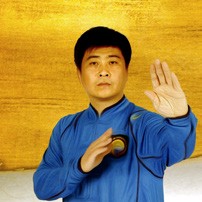
    Yang Lu Chan’s sons Yang Banhou  and  Yang  Jianhou  and his   grandsons    Yang   Shaohou and Yang Chengfu all worked to develop and  spread Yang Family Tai Chi Chuan.    Yang Banhou developed a small frame form and Yang Jianhou developed a middle frame form.  It was Yang Chengfu (1893-1936), Yang Luchan’s grandson,  who standardized  and popularized the current  large frame  form   and   travelled beyond Beijing to spread it widely. Yang Zhenduo, the 4th  generation lineage inheritor continued to spread the art throughout  China and began travelling outside of China to teach internationally. Today,  the  international   spread of  Yang Family Tai  Chi  Chuan continues  with  the  work  of  the 5th  generation lineage inheritor, Grandmaster  Yang Jun, the  first generation   to   live   outside   of China.

    Yang style is the most widely practiced style of Tai Chi Chuan in the world today.   Yang style’s movements are large, extended, graceful, simple, clear, and carefully structured. The movements are gentle, relaxed, flowing, and performed at an even pace while still maintaining martial aspects.

  • How to Make Your Lodging Reservations

    After you register for the Symposium, you will need to make arrangements for lodging. One possible source of lodging is Morrison Hall dormitory at Spalding University. This is your least expensive lodging option. Please note that the option of Spalding Suites previously mentioned in Newsletter Issue 1 is no longer available. There are also many hotels located nearby. The Symposium has reserved a block of rooms at a discounted rate at the Seelbach Hilton Hotel located about 0.6 miles or 1 km from Spalding University. More information including costs, deadlines, and links for registering for lodging at Spalding University or the Seelbach Hotel can be found on the Symposium’s website.

  • The Seelbach Hilton Hotel

    Symposium-newsletter-3_page8_image2Symposium-newsletter-3_page8_image4Symposium-newsletter-3_page8_image5


    Location address: 500 S. FOURTH ST.
    Phone: 1 800 333-3399

    During the Symposium, the Seelbach Hilton Hotel will be the site of the Welcome Banquet and the Volunteer Staff Appreciation Breakfast. It is located at 500 South Fourth Street, next to the Fourth Street Live! dining and entertainment district. The Seelbach Hilton Hotel is on the National Register of Historical Places. It is a 4-Diamond luxury hotel considered to be the premiere hotel in the state of Kentucky and has hosted many celebrities. It was built in 1905 and has recently been renovated. Now you can experience its historic grandeur and Southern hospitality with all the contemporary amenities of a modern-day luxury hotel.

    This elegant hotel is located about a 1/2 mile walk from Spalding University. City transit buses provide inexpensive transportation for those who do not care to walk to Spalding University. Also, the hotel is closer to the location for the morning practices with the Grandmasters than the Spalding campus dorms.

    Visitors will experience an interesting bit of American history. The hotel was first built in 1905. In the 1920s, The Seelbach, being the grandest hotel in Louisville and the center of Kentucky’s bourbon and whiskey country, attracted some of the most famous gangsters in American history. Al Capone, the most legendary gangster of the 1920s, used to visit the Seelbach frequently for blackjack, poker, and bootlegging. Today, you can dine in a small alcove in The Oakroom where Capone played cards. The famous gangster even sent a large mirror from Chicago, still in the room today, so that he could watch his back. Capone’s favorite room also has two hidden doors behind special panels, leading to secret passageways.

    The Seelbach was also the inspiration for F. Scott Fitzgerald’s classic American novel The Great Gatsby. Fitzgerald often visited the hotel and chose the Grand Ballroom at The Seelbach as the backdrop for Tom and Daisy’s wedding reception in his American masterpiece. 

    seelbachhilton.com

  • The Muhammad Ali Center

    Symposium-newsletter-3_page7_image1


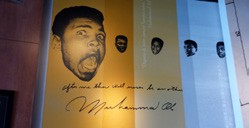
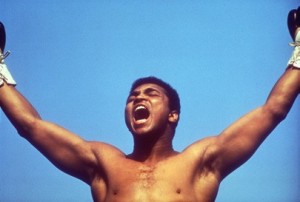
    The Muhammad Ali Center is a multicultural center with an award-winning museum dedicated to the life of world-famous heavyweight boxing champion Muhammad Ali. The mission of the Center is to preserve and share the legacy and ideals of Muhammad Ali, to promote respect, hope, and understanding, and to inspire adults and children everywhere to be as great as they can be.

    Symposium-newsletter-3_page7_image2


    Located in downtown Louisville, The Muhammad Ali Center will be the site of the Symposium’s Friendship Party on Friday, July 11. Those who attend the party will receive a free tour of the Center and admission tickets to its museum.

    alicenter.org

  • Louisville Visitors Center

    Visitors Center

    Location address: 301 S. FOURTH ST.
    Phone: (502) 379-6109

    While you are in Louisville for the Symposium, you may wish to explore the city’s many tourist attractions. A great resource for you is the Visitors Center located at 301 S. Fourth St., at the corner of Fourth and Jefferson. It is conveniently located in the Fourth Street Live! district near the Seelbach Hilton Hotel.

    Visit or phone the center when you are in Louisville or before you arrive and let their staff help you discover where to go, where to eat, how to purchase attraction tickets, plan your tours, or help you if you need to get directions or information on how to take a bus or taxi. The staff can also inform you of any discount offers for tourist attractions at the time of your visit. There is also a souvenir store located in the Visitors Center.

    Links:

    gotolouisville.com
    http://www.gotolouisville.com/travel-tools/visitors-center/index.aspx

  • My 2009 Symposium Volunteer Experience

    2014 Symposium Newsletter Issue 2_page30_image2by Jim Showalter
    Lexington, KY, USA

    In 2009, I was a volunteer for the International Tai Chi Chuan Symposium. My role began in the planning stages of the Symposium. I have to admit I was a little reluctant to volunteer. I could see the Symposium was becoming a larger  event than first anticipated. Having a full-time job, a family, and multiple Tai Chi classes to teach, I just didn’t feel there were enough hours in the day. I reluctantly volunteered anyway.

    My volunteer work began in the planning stage of the Symposium. I was part of a team that compiled a database of people in the Wellness and Tai Chi worlds to invite. I also volunteered to help the group handling Registration & Housing with some of their advance registrations, and was assigned to help the Brazilian International Yang Family Tai Chi Chuan Association Center members with their online registrations, payments, and dormitory reservations. Angela Soci, co-director of the Sao Paulo Center, was very helpful in making this job go smoothly. I was very grateful for her help. I enjoyed getting acquainted with several of our Brazilian Tai Chi brothers and sisters via email before the Symposium.

    The day before the Symposium, I arrived in Nashville for an administrators/managers meeting and assisted the managers, lending a hand wherever I could. Once the Symposium started, my main assignment was to help people in Group A get to and from the workshops with the Grandmasters. I assisted them in getting to the workshop area and after arriving, got them organized and ready for the workshop. The good part about this volunteer job was that I also got to participate in the workshops!  But at first I felt a little uncomfortable in this role. Everyone I knew was in Group B. However, throughout the week I enjoyed meeting and exchanging cultural and Tai Chi information with Group A members and made many new friends and acquaintances from around the United States and the world.  Some were International Yang Family Tai Chi Association members; some were not. It was an enriching experience for me. When moments could be found between events, I got to meet and compare notes with teachers from Australia, Brazil, China, Europe and more. We were all learning, and we were all having a good time. We were, in my mind, all Tai Chi brothers and sisters.

    I also really enjoyed meeting the people I had been emailing back and forth with for the previous several weeks. The directors of all three Brazilian centers took the time to warmly introduce themselves to me as they arrived. I also have some fun memories of time spent with attendees from other countries. One evening, Bob Ashmore and I took new arrivals from Canada and Australia to a little bar & grill restaurant we had just discovered. Knowing we shouldn’t, we told them to ask about the day’s special burger. It had over 40 ingredients and even if you tried to stop him, the restaurant owner insisted on reciting all 40 of them! Also, I got to know a Brazilian attendee who joined Bob and me at local eateries and we talked about similarities and differences in American and Brazilian culture. One day he asked if there was a bakery nearby because the next day was his teacher’s birthday. We pointed him to a cupcake bakery a few blocks away, and learned that cupcakes were not common in Brazil.

    Sometimes in my role of volunteer I was spontaneously asked to help with other tasks or assist others with challenges they were having. Whenever challenges arose, it was good to know that I was part of a team and my experience was that everyone pitched in to help each other.

    Yes, I was a reluctant Symposium volunteer at first. But in the end, I’m very glad that I did choose to volunteer. If you are thinking about volunteering, I have only one piece of advice: Do it!

  • Introducing Grandmaster He Youlu and He Style Tai Chi Chuan

    2014 Symposium Newsletter Issue 2_page5_image5On Sunday July 6, 2014 before the formal opening ceremonies, the International Tai Chi Chuan Symposium will feature two 2-hour Pre-Symposium workshops with Grandmaster He Youlu. Grandmaster He (pronounced with a soft “e” as in “her”) was born in 1963 in the town of Zhaobao, Wen County, Henan Province. He is the lineal descendant of He Zhaoyuan, the founder of He Style (also referred to as “Zhaobao He Style”) Tai Chi Chuan. A 7th Duan Chinese martial artist, Grandmaster He is the President of the He Style Tai Chi Chuan Academy in Wen County and is the representative successor of  the He Style’s cultural heritage. He is also the Chairman of the He Style Tai Chi Chuan Association in Jiaozuo, Henan Province.

    For many years, Grandmaster He Youlu has devoted himself to the study, popularization and teaching of Tai Chi Chuan. In order to spread Tai Chi culture, he has travelled to many places, both in China and abroad. He has acquired mastery of both Tai Chi practice and theory, and compiled three monographs: He Style Taiji Spectrum, Thirteen Forms of He Style Taiji, and One Hundred and Eight Forms of He Style Taiji (Chinese editions with English Translation). He has also made various teaching DVDs and VCDs including He Style Taijiquan, Taiji Sword, Taiji Broadsword, Taiji Spear, and Push Hands. These were published by the People’s Sports Press and Haiyan Press. Grandmaster He also gave a series of lectures about the learning of He Style Tai Chi Chuan in Treasures of Chinese Martial Arts, a full-length documentary made in 2008 which was approved by the Chinese Wushu Association and supervised by the Martial Arts Institute of China State General Administration of Sports. Also in 2008, he became the chief editor of the Textbook Series of Chinese Wushu Duanwei System: He Style Taijiquan, a book approved by the Chinese Chinese Wushu Association and published by Higher Education Press.

    History and Characteristics of He Style Tai Chi Chuan

    He Style Tai Chi Chuan (sometimes referred to as Zhaobao style, named after the original town of Zhaobao) was founded by He Zhaoyuan (1810-1890) in the late Qing dynasty. He Zhaoyuan was a native of the town of Zhaobao, Wen County, Henan Province. He came from a family that studied Chinese medicine and began to learn Tai Chi Chuan from Chen Qingping in his hometown. Later he worked in Beijing and because of his great skill was appointed to the military post of Wuxinlang. Under the influence of Li Tangjie, he reformed his Tai Chi and developed an original style that would be called He Style Tai Chi Chuan. He Zhaoyuan taught his sons He Jingzhi and He Renzhi as well as his grandson He Qingxi. He Qingxi (1857-1936) passed his teachings to his son He Xuexin. He Xuexin passed his knowledge to his grandson He Youlu who is the current representative of He Style Tai Chi Chuan and the Director of the He Style Tai Chi Chuan Academy in Wen County.

    2014 Symposium Newsletter Issue 2_page23_image1There are 72 postures in traditional He Style Tai Chi Chuan. The philosophy of Yi (changes), Yin and Yang, the five elements, the eight trigrams, Confucianism, and theories of Chinese medicine have influenced the development of this style. The circular movement and the pursuit of hardness in gentleness enable the coordination of the body and the footwork. The frequent changes of Yin and Yang guarantee a  myriad of skills and techniques, achieving the effects of being slippery as fish, sticky as glue, soft as cotton, and hard as steel. He Style Tai Chi Chuan requires internal and external coordination, which promotes the circulation of chi and blood, and the balance of internal organs and energy channels to enhance health, cure illnesses,  and prolong life.

    The playing principle of He Style is gentle, circular, and natural. The playing rhythm may be either quick or slow and the frame may be either large or small.

    It is an honor to have Grandmaster He join us for the 2014 International Tai Chi
    Chuan Symposium in Louisville, Kentucky, USA.

  • Master Han Hoong Wang

    2014 Symposium Newsletter Issue 2_page19_image1Master Wang is the director of the Michigan Yang Chengfu Tai Chi Chuan Center,
    affiliated with the International Yang Family Tai Chi Chuan Association.
    Certified as a Wushu and Tai Chi Teacher by the Chinese Government Education
    Department, she has been teaching Tai Chi for over 30 years. Born and trained in
    China, she taught modern styles of Tai Chi Chuan in China and in the United States
    before teaching traditional family styles.

    For Master Wang, the pursuit of knowledge, understanding, and excellence in
    Tai Chi Chuan is a life-long journey. She has traveled extensively throughout the
    U.S. and back to China to study with the world’s top masters.

    In 1993, she began her studies in Yang Style Tai Chi Chuan with Grandmasters Yang
    Zhenduo and Yang Jun. In 1996, she started studying Chen Style Tai Chi Chuan
    with Grandmaster Chen Xiaowang and has trained with him since then. In 2002,
    she became a disciple of Grandmaster Yang Zhenduo. These masters significantly
    contributed to her development, learning, and passion for Tai Chi Chuan.

    An engaging and gifted teacher, Master Wang captivates students from the very first
    moment and keeps them engaged in the learning process throughout her classes.

  • Tai-Chi Kung

    Tai Chi Training Methods

    The 2014 Symposium features workshops with each of the Grandmasters of the main styles of Tai Chi Chuan. Since many people only practice one style and would choose to continue to practice their style, a common question is: What is the value of learning from various styles at the Symposium? If you look at the Symposium schedule, you will see each Grandmaster’s workshop described as “Tai-Chi Kung: Tai-Chi Training Methods”.

    For the Symposium, each Grandmaster has designed a 10-movement sequence unique to their style which teaches the essentials of that particular style. Learning only ten movements will make it easier for attendees to remember the sequences so that the Grandmasters can go into more in-depth training beyond just learning the movements. Training methods train the way of practicing the Tai Chi Chuan style. For example, all Tai Chi Chuan styles talk about unifying energy but they use different methods and have different training approaches for this. Another example is in the Chen style, they use the method they call “silk reeling”. They have a very detailed way to talk about when to have this type of coordination. Yang style doesn’t use this term. Yang style and the other styles have a simpler approach but do something similar. By studying this method of silk reeling with the Chen family, you can gain a deeper understanding of where this exists in other forms. Also, Yang style rotating and circling is similar to Chen’s in theory, but Yang style does it differently. All the styles can give ideas to improve your own style.

    Attendees will learn the five basic areas (footwork, body shape, hand technique, eyes/spirit, and methods) of each style. They will also learn the meaning of the movements in terms of energy development and martial application, and will learn what is special about that particular style. Attendees will also experience teaching techniques unique to these particular Grandmasters.

    The Grandmasters’ workshops will provide insights into how the five traditional styles vary in their approaches to learning Tai Chi Chuan while showcasing the similarities that make all Tai Chi Chuan styles part of one family. Through this enriching learning experience, attendees will gain a deeper understanding of each method and be able to compare the similarities and differences with their own chosen Tai Chi Chuan style, thus enriching their understanding of their own style.


  • Grandmaster Chen Zhenglei

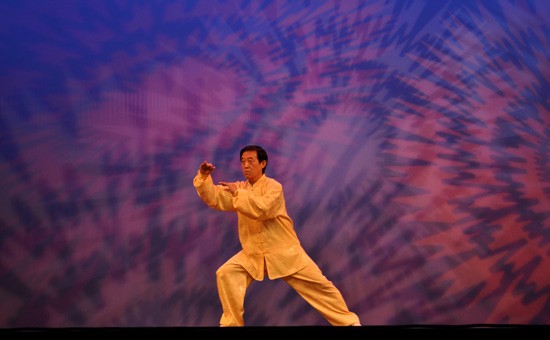
    2014 Symposium Newsletter Issue 2_page12_image1The    2014    Symposium    features    Grandmasters from    five   main    styles   of   Tai   Chi   Chuan. Chen   Style,  originating   from   Chen   Wangting (1600-1680),     is     a     style     that      is     often demonstrated   more  dynamically  than  other  styles.    The rhythm   of  movement   changes  frequently   and   includes brief   stopping    for   gathering   energy   before   releasing energy back to  the  opponent.    Externally it appears  quite dynamic   and   martial   with   coordinated   stomping   and fist-pounding for a sudden release of energy. Chen Style is also characterized by a more visible emphasis on silk reeling than other Tai Chi styles.

    Chen  Style Tai  Chi  Chuan  will be  represented  at  the Symposium by Grandmaster Chen Zhenglei. He was born into a family with over 300 years of martial  arts tradition  and is widely recognized as one  of the  leading representatives of Chen Style Tai Chi Chuan in the world today.

    Grandmaster  Chen  Zhenglei is a 19th generation descendant of the Chen family and the 11th generation direct-line successor of Chen Family Tai Chi Chuan. He  was born  in  1949 in  Chenjiagou, Wen  County,  Henan  Province, China. He  began  studying  when he was 8 years old with his uncle Chen Zhaopei (1893-1972) who  was his  main instructor. He later studied with another  uncle, Chen Zhaokui  (1928-1981), the son of Chen Fake.

    From 1974 to 1987, Grandmaster Chen Zhenglei won numerous    gold    medals in competitions and also successfully defended  his title  as Grand  Champion of Tai Chi Chuan  in two consecutive National Tai Chi Chuan competitions. Since 1983 he has travelled extensively  at  the  international   level and has tens of thousands  of students worldwide. Devoted to the teaching of his art, Grandmaster Chen has authored a  wide  series of  Chen  Style Tai  Chi Chuan  books and  DVDs covering all traditional  forms and weapons.  These training  materials are highly regarded in the world of Tai Chi Chuan and have been  translated  into  many  languages. He has also authored  many important articles   and    books   explaining   Tai Chi’s theory, fundamentals, and relationship to the Chinese meridian system.

    Grandmaster Chen Zhenglei has held many important administrative roles in various martial arts organizations, including the head coach at the Chen Village National Tai Chi Center. Currently, he is the vice-president of the Chen Family Tai Chi Chuan Association of Henan Province and the director of the Chen Village Tai Chi Chuan Training Center of Zhengzhou. He is also a committee member of the Chinese Wushu Association, the vice-chairman of the Henan Province Wushu Association, a senior National Wushu Master, and a committee member of the Chinese Sports and Science Institute. In recent years, Grandmaster Chen has continued to receive many important honors. In 1995, he was officially recognized as one of China’s modern day Top Ten Martial Arts Masters.

    In 2011, he received the distinction of being on the Cambridge List of the Most Distinguished Chinese People in the World. Recently, in 2012, he was certified as a 9th Duan Tai Chi Master by the Chinese Wushu Association. Only a handful of Tai Chi Masters in the world hold the prestigious rank of 9th Duan, the highest rank, and most earn their title later in life. One of the most skillful Tai Chi Masters in the world, it is an honor to have Grandmaster Chen Zhenglei participate in the 2014 Symposium.
    2014 Symposium Newsletter Issue 2_page15_image3A Conversation with Grandmaster Chen Zhenglei

    In Issue #20 (2006), the International Yang Family Tai Chi Chuan Association Journal published an interview with Grandmaster Chen Zhenglei by Dave Barrett. A portion of this interview is reprinted below:

    DB: My first teacher always encouraged us by saying “Catch the feeling!” Sometimes the feeling is there for just a small part of a sequence, but maybe with the next practice a little bit more.

    CZ: In my experience with Western students, I know that sometimes they only practice once a week, sometimes twice or three times a week. Because they don’t practice every day, this kind of feeling develops very slowly. In China we say that if you practice for one day you get one day’s benefit. With daily practice you can steadily improve. If you don’t practice for one day you lose ten days of development. So practice every day without stopping. Western students must understand this clearly. Practice every day! Not once or twice a week.

    DB: When you practice today and you hear the voice of your teacher in your mind, what is he saying?

    CZ: In my younger years when I practiced, I was quite serious about my work. My whole life I have followed the teachings of my uncles, Chen Zhaopei and Chen Zhaokui. When they taught I always watched very carefully. At that time my deep feeling was that I wanted to grow up to be like them. I listened to their voices and watched their motions closely. At that time there were no recorders or video cameras. My eyes were the camera and my mind was the recorder. If I needed to check something, I would sit down, close my eyes and review. If I was not satisfied with my practice, I would check my memories and think about my uncles. Sometimes I would hear them criticizing my efforts using rough language to spur my practice onwards.

    DB: So you still hear this?

    CZ:Yes, even now when I may not want to practice I hear my uncles’ voices pushing me, giving me energy to practice. It doesn’t matter what difficulties I’ve been through. In the 1980s when I met people who wished to challenge me, I’d hear my uncles giving me confidence to win these challenges.

    Throughout my career, I have been through five stages. First, when I was a farmer up to the time I was 25 years old I was studying with my uncles. The next ten years I was working in a factory while continuing my martial arts training. I was traveling around as a salesman and I made contacts with other teachers and I was able to benefit from these friendships and improve our factory sales. During these ten years, I would often represent our village at competitions. The third stage found me working with national sports officials and I became a professional coach. I continued my training and began to teach a large number of students, some of whom won many competition honors. In the fourth stage, I began to organize regional and national competitions. Now at the fifth stage, I’ve got a job I really like, traveling internationally and sharing my family traditions.

    When I was living in Chenjiagou, I focused on my own training and my individual duty to our family. At the second stage I began to travel and see that perhaps there might be a career in the martial arts. In the third and fourth periods, because I met many other teachers and was working as a player, coach and manager, I began to realize this could be a very good family business as well. Now that I travel internationally meeting many people who have a love of this art, now my focus is on how we can spread Tai Chi Chuan. I’ve been working on books and videos and I feel a true calling to this work. It is more than just a business. I’ve been fortunate to receive recognition within China as one of the top ten Masters and I’m getting a lot of support from my students and no longer have to work a factory job. Now that China is open, I wish to spread traditional Chinese arts throughout the world so that more people can enjoy Tai Chi Chuan practice.