Author: admin

  • Symposium Posters for Tai Chi Schools


    5-Symposium_journal_page19_poster

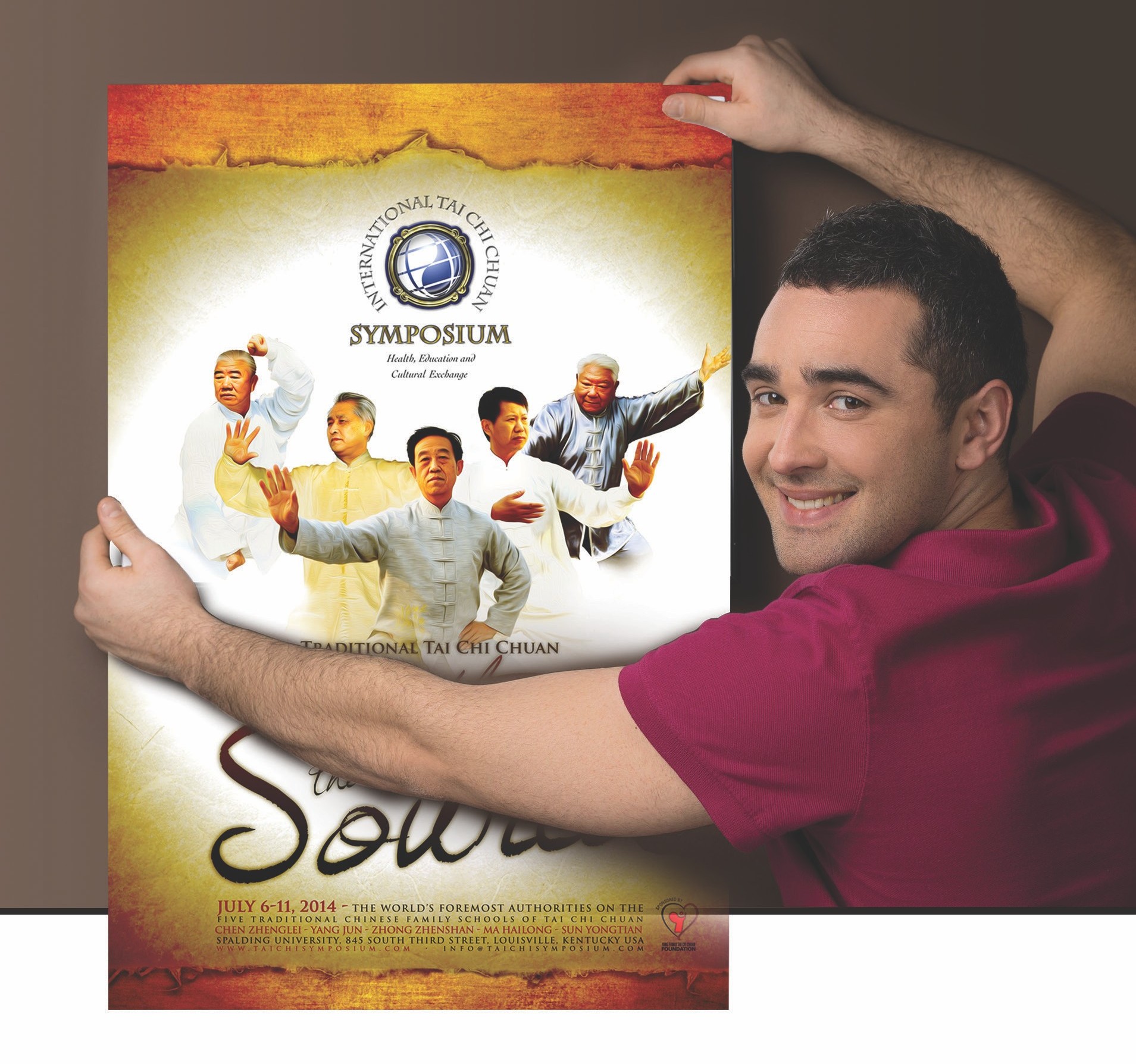
    Share the gift of Tai Chi Chuan! The Symposium is a rare opportunity for your students and other students at Tai Chi schools of all styles in your area to learn Tai Chi Chuan from the Grandmasters. It is an opportunity for all students to expand their depth, knowledge, and skill of Tai Chi Chuan beyond their current level. Now there is an easy way to help make students aware of the 2014 Symposium.

    There are Symposium posters that you can download, print and hang up in your school, or email to your student list if you would like to. Also, consider contacting other Tai Chi schools in your area to let them know about the Symposium and see if they would like a poster for their school. To view and download posters, please visit: http://www.yangfamilytaichi.com/download/. Many thanks for your support in helping others learn about the 2014 Symposium and sharing the gift of Tai Chi Chuan.

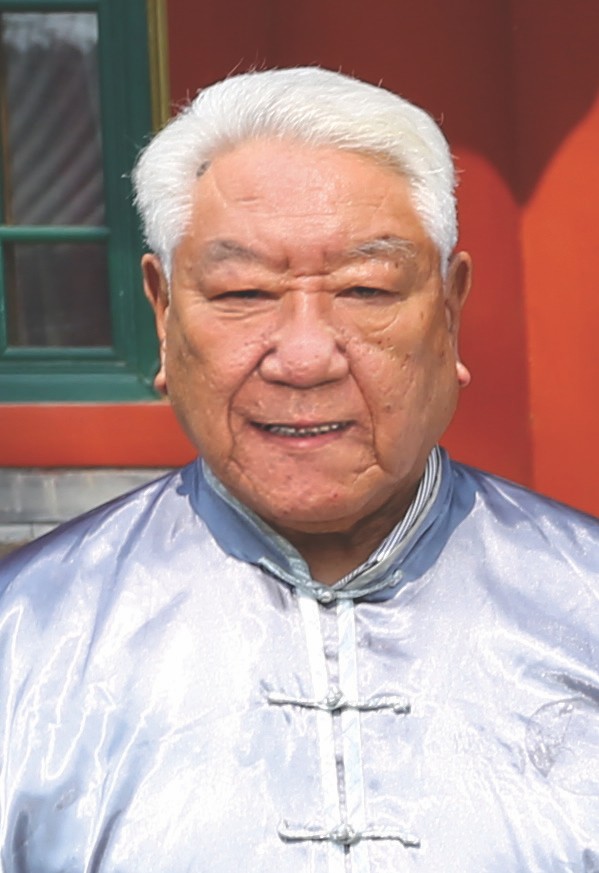
  • Grandmaster Ma Hailong

    5-Symposium_journal_page16_image1

    Grandmaster Ma Hailong was born in 1935 into one of China’s most distinguished 

    martial arts families. His great-grandfather, Quan You (1834 – 1902), was an officer of the Imperial Guards Brigade in Beijing’s Forbidden City. At this time, Yang Luchan (1799-1872) was a martial arts instructor there and for many years Quan You studied with Yang Luchan and his eldest son, Yang Banhou. 

    Grandmaster Ma’s grandfather, Wu Jianquan (1870-1942), was a cavalry officer who subsequently taught Tai Chi Chuan and developed from his father’s art what is now the Wu style. Utilizing the “small frame” his father had learned from Yang Luchan, he made important modifications utilizing narrower circles and the distinctive footwork and body positions now seen in Wu style Tai Chi Chuan. In 1914, along with his colleagues Yang Shaohou, Yang Chengfu and Sun Lutang, he began teaching publicly at the Beijing Physical Culture Research Institute. As he taught to the general public, he continued to make modifications to his style, refining the more overt martial techniques in much the same way that Yang style has, making the motions slower and smoother for a wider appeal. In 1928, Wu Jianquan moved to Shanghai and formed the Wu style Tai Chi Chuan Association in 1935.

    Grandmaster Ma’s father, Ma Yuehliang (1901-1998), began studying with Wu Jianquan at the age of 18. In 1930 he married Master Wu’s daughter, Wu Yinghua (1906-1996), and served as deputy director of the Shanghai Association.

    From the age of 6, Grandmaster Ma began learning Tai Chi Chuan in this especially rich environment. Both his parents were accomplished teachers and his uncles had studied intensively with his grandfather. He remains dedicated to this day to sharing his family’s traditions.

    For over 70 years Grandmaster Ma has been practicing his family’s techniques and is now President of the Shanghai Wu Style Tai Chi Chuan Association. His traditions emphasize focused, tranquil and consistent practice. Master Ma’s performances are characterized by a high degree of expressed equilibrium and natural calmness. He holds a doctorate in Chemistry and since his retirement as a professor, he dedicates his efforts to expanding the practice of Wu style Tai Chi Chuan.

    It is an honor to have Grandmaster Ma Hailong at the 2014 Symposium.
  • Wu Style Tai Chi Chuan

    Wu style originated from Quan You (1834 – 1902) who was born in Da Xing County, Beijing. He was a Manchurian and a member of the Imperial Guard in Beijing. He learned the art of Tai Chi Chuan directly from Yang Luchan, and also under his son, Yang Banhou. Quan You later modified what he learned, and his art evolved to be recognized as a separate style of Tai Chi Chuan. His style became known as the Wu School because his son Wu Jianquan (1870-1942), himself an accomplished master, adopted a Han family name “Wu”. Hence Quan You, through his son Wu Jianquan is honored as the founder of the Wu School of Tai Chi Chuan.

    Wu Jianquan also modified the forms taught to him by his father. In 1928 he moved to Shanghai and was appointed to the Board of Directors of the Shanghai Martial Arts Association. He also became the supervisor of the Tai Chi Chuan section of the Jing Wu Association.

    The first Wu Tai Chi Chuan Academy was established in Shanghai in 1935 and was directed by Master Wu Jianquan, with his son-in-law Ma Yuehliang as vice-director. Ma Yuehliang (1901 – 1998) was a student of Wu Jianquan and was the husband of Wu Yinghua (1905 – 1996), the third child and first daughter of Wu Jianquan. She was recognized as the senior instructor of the Wu family in China, along with her husband. Besides his daughter, Wu Jianquan also had two sons, Wu Gong Yi and Wu Gong Zao who also helped to spread the art.

    Wu style’s distinctive hand form, push hands and weapons training emphasize parallel footwork and horse stances, with the feet relatively closer together than the modern Yang or Chen styles. It includes small circle hand techniques (although large circle techniques are taught as well). Wu style has an initial focus on grappling, throws, tumbling, jumping, foot sweeps, and at advanced levels, pressure point leverage, joint locks, and breaks. It seems to have a distinct forward leaning but actually the leaning is around the center. It is very rooted.

    Wu style will be represented at the 2014 Symposium by Grandmaster Ma Hailong, the son of Masters Ma Yuehliang and Wu Yinghua.

  • Videos from 2009 Symposium

    You can choose the video from the upper left corner.

    Check back for new ones.

  • Morning Sunrise Practices

    5-Symposium_journal_page11_image1During the Symposium, join us for daily morning sunrise practices Monday to Friday, 6:15-7:00 a.m. These practices present exercises and movements that are related to Tai Chi Chuan but are different from practicing a form or sequence. The morning sunrise practices are a wonderful way to begin your day in tranquility and they will contribute to your sense of physical and mental well-being and enhance your experience of the Symposium. Practices are both indoor and outdoor.

    Outdoor practices take place Monday, Tuesday, Wednesday and Friday and are led by a different Grandmaster each morning. The Grandmasters will introduce some early morning exercises that are customarily used within their style. Enjoy this unique chance to learn these exercises. You do not need to know the traditional form of each style to follow along. You will enjoy these practices regardless of your style or level of experience. The outdoor morning sunrise practices will be held at Fourth Street Live!, under the covered area close to the Seelbach Hotel. (For those staying in the Spalding University dorms, walk north on Street about a ½ mile and you will see the covered area.) Traffic is blocked off to this area and we will be practicing right on the street. 4th Street Live! is Louisville’s premier dining, entertainment and retail destination located on 4 th Street between Liberty Street and Muhammad Ali Boulevard.

    Indoor practices take place Monday, Tuesday, Wednesday, and Friday, 6:15-7:00 a.m. They are led by a different Yang Family Center Director from a different country each morning (except Thursday) and will be held in the Spalding University Center Gymnasium. These guest leaders will present gentle movements and exercises, selecting from their own resources and preferences. They will not lead a practice in any of the special forms the Grandmasters are introducing.

    Greater Louisville Community Open Tai Chi Practice, Thursday July 10, 6:15-7:45 a.m. Thursday morning, everyone goes to the “Greater Louisville Community Open Tai Chi Practice”, at Fourth Street Live!, where the general public is invited to come and practice with all of the Grandmasters in turn. This special event is in partnership with the “Mayor’s Healthy Hometown Movement”, launched by Louisville Metro Government to create a culture of health and wellness with a vision of its becoming one of the healthiest cities in America. The Symposium is delighted to have this opportunity to showcase the Grandmasters, who exemplify living a healthy way of life, and to include community members in the Symposium morning’s activity

  • Lodging Update

    Update to the Update: The deadlines for dorms and special-rate hotel rooms have passed. 

    Dorms: Many people have chosen to stay in dorms and as a result, the dorms available to the Symposium attendees at Spalding University are now fully booked. Currently we have dorm rooms under contract at the University of Louisville which is located about 2 miles south of Spalding University. The dorms at the University of Louisville are on a direct public transit bus line along 4 Street, the same street as the Spalding University dorms. It is an easy, direct route up 4th Street to Spalding University, the Seelbach Hotel, and 4th Street Live!. The bus will also take riders within 3 blocks of the Muhammad Ali Center for the Friendship party Friday night. Attendees will likely need to purchase a weekly bus pass. (The bus pass would also be useful for attendees to visit local attractions.)

    Hotel: There are still rooms available at the Seelbach Hilton Hotel. The Seelbach Hotel is the venue for the Welcome Banquet, and is right at 4 Street Live!, the site of the daily outdoor morning sunrise practices with the Grandmasters. The Seelbach Hotel is about a ½ mile walk from Spalding University. There is also public bus transit to Spalding University. This grand hotel is a 4-Diamond luxury hotel, is rich in local history, and is considered the premiere hotel in the state of Kentucky. The Symposium rate (see link on Symposium website) is a greatly discounted $109 per night per room. If you would like to share the cost with a roommate, email info@2014.symposium2014.yangfamilytaichifoundation.org and we will do our best to match you with a roommate. The deadline to receive the discounted Symposium hotel rate is Monday, June 2, 2014.

  • Program and Schedule of Events updated

    The master Program and Schedule of Events has been updated. You can download it from this page: http://symposium2014.yangfamilytaichifoundation.org/symposium/program/

  • Don’t Miss the Symposium!

    Dears Friends,


    I attended the last Symposium in 2009 in Nashville. It was an excellent and amazing experience, because we learned so much with the 5 great masters and all academics. It was a privilege to learn directly from the source with the 5 leaders of the 5 traditional Tai Chi Chuan styles.

    I recommend the second Symposium to everybody: if you are a Tai Chi Chuan practicioner, don´t miss the next Symposium; If you don´t know  Tai Chi Chuan, don´t miss the next Symposium too, because it will be a great opportunity to learn directly from the source. Tai Chi Chuan can help all of us to improve our health and life quality, then, go and attend the International Tai Chi Chuan Symposium in Louisville next July and enjoy the amazing wisdom of the Great Tai Chi Chuan Masters.


    Fernando De Lazzari – from Ribeirão Preto city, Brazil.